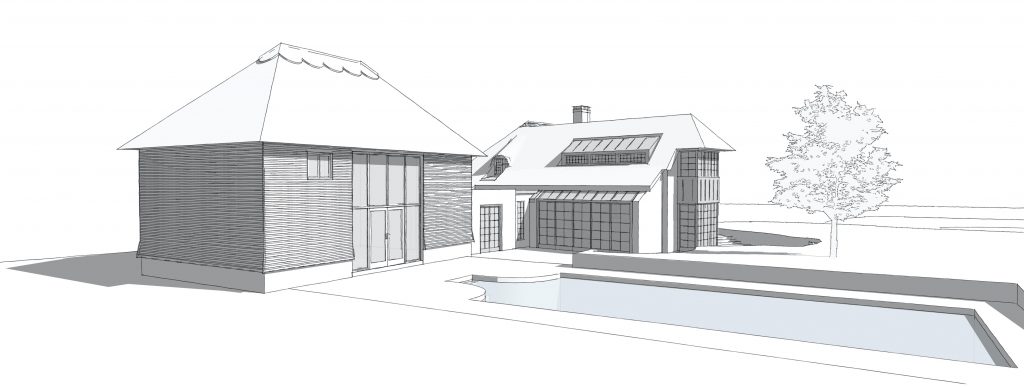


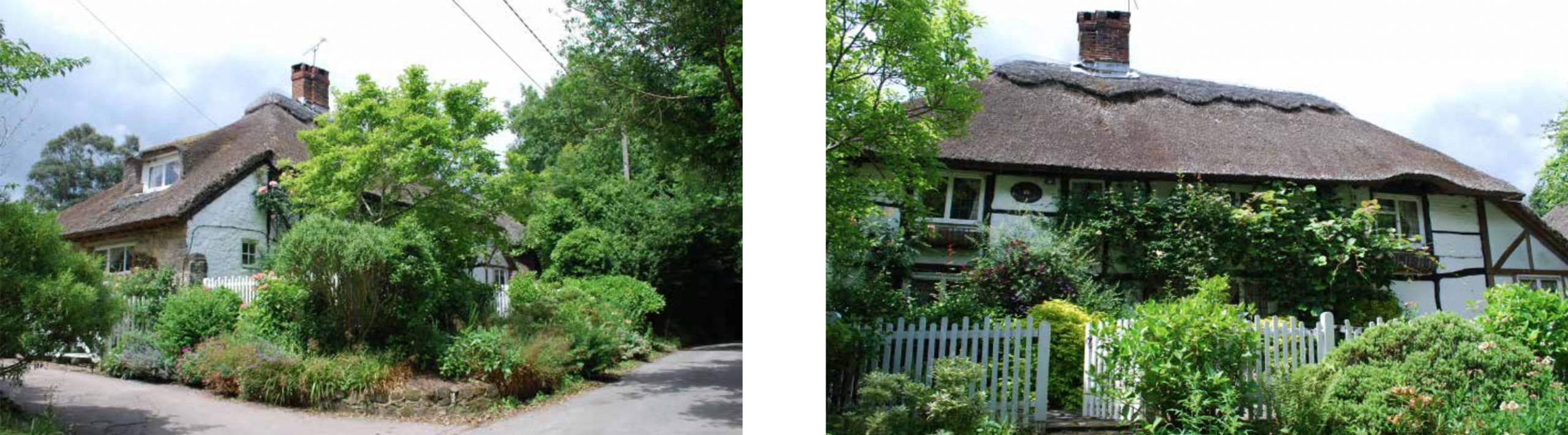
Nestled within a hectare of rolling Sussex countryside, this project involved the sensitive transformation of Random Cottage, a stunning 16th-century Grade II listed timber-framed home. Our architectural challenge was to harmonise the site’s historical narrative with modern living requirements, connecting the original dwelling with an existing traditional barn and outdoor pool area by providing a Grade II Listed Contemporary Extension.
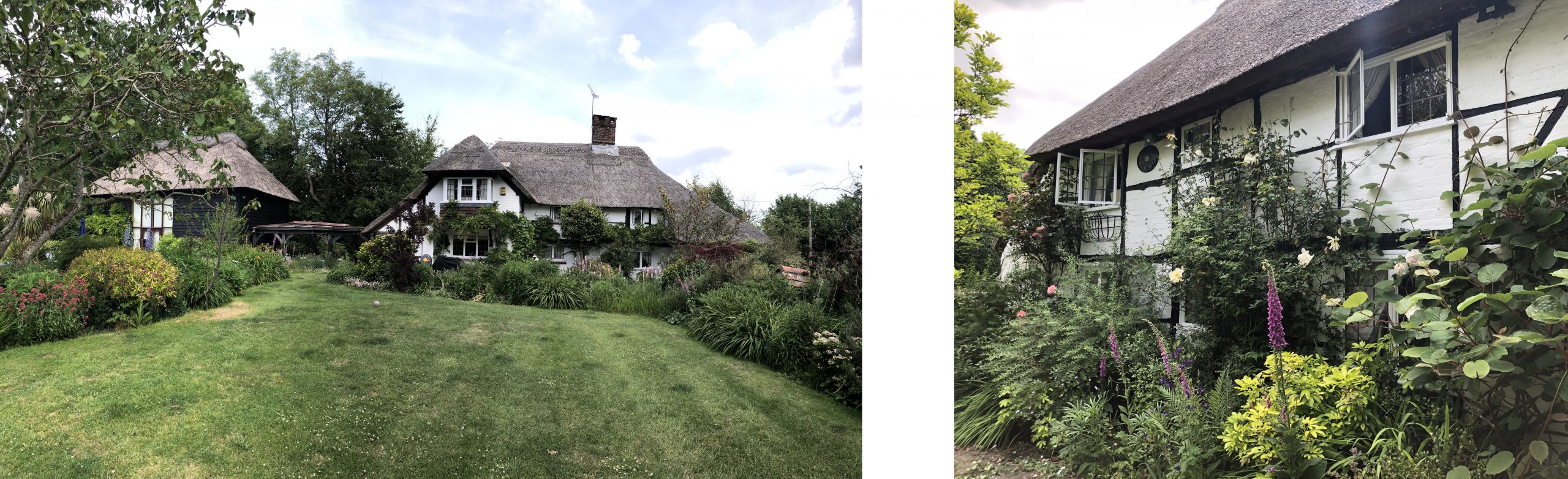
The Vision: Contemporary Design Meets 16th-Century Craft
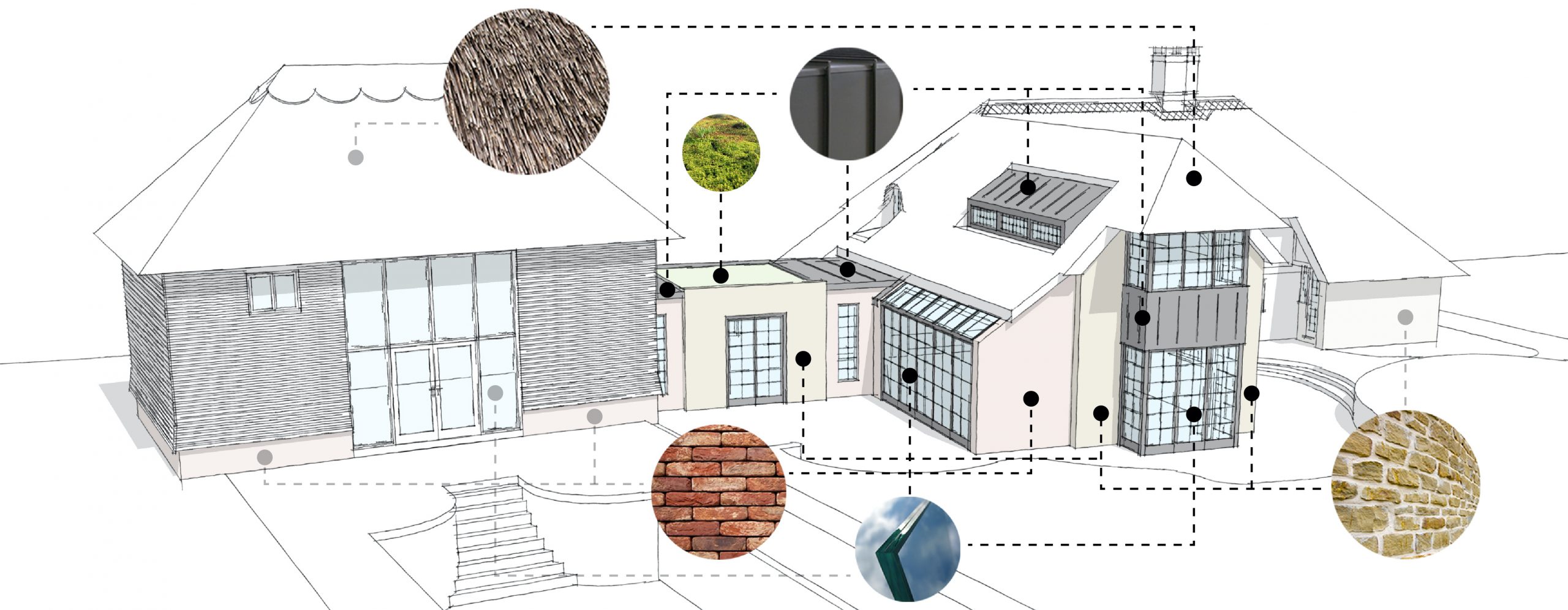
Our design proposed a contemporary two-storey extension that pays homage to the local vernacular while asserting its own modern identity. By continuing the traditional thatched pitch roof, the extension sits comfortably alongside the historic cottage. However, its construction age is celebrated through high-performance contemporary glazing and refined architectural detailing.
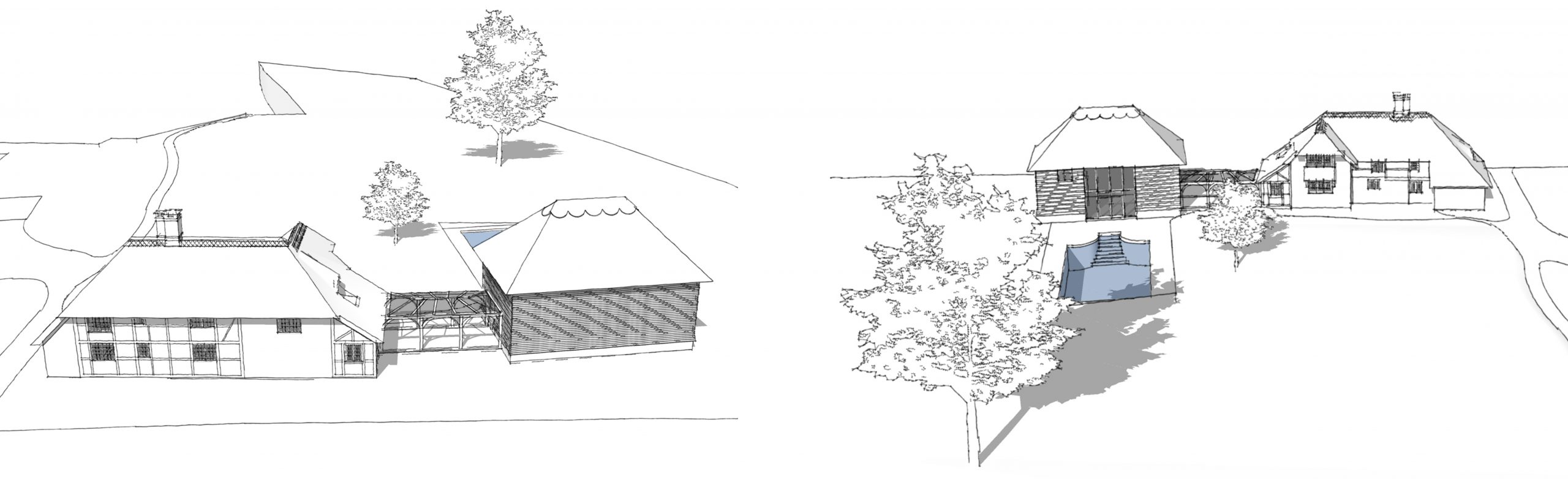
The project also features a minimalist link extension. This lightweight, primarily glazed intervention serves as a secure, weather-protected passage between the cottage and the barn, creating a unified flow across the site without detracting from the original listed silhouettes.
Reimagining the Internal Layout
The internal reconfiguration was driven by the need for intuitive circulation and spacious, light-filled rooms:
-
Ground Floor: A new open-plan kitchen and breakfast room serves as the heart of the home, supported by a dedicated pantry and utility space. We relocated the primary entrance to create a clear, welcoming arrival point for visitors.
-
First Floor: The extension houses a luxurious master suite. By converting an existing bedroom into a transition hallway, we facilitated seamless access to an enlarged family bathroom and bespoke walk-in wardrobes.
-
The Multi-Use Link: The glazed connection provides a flexible space for recreation while offering privacy from the road through strategic orientation.
A Palette of Local Materials
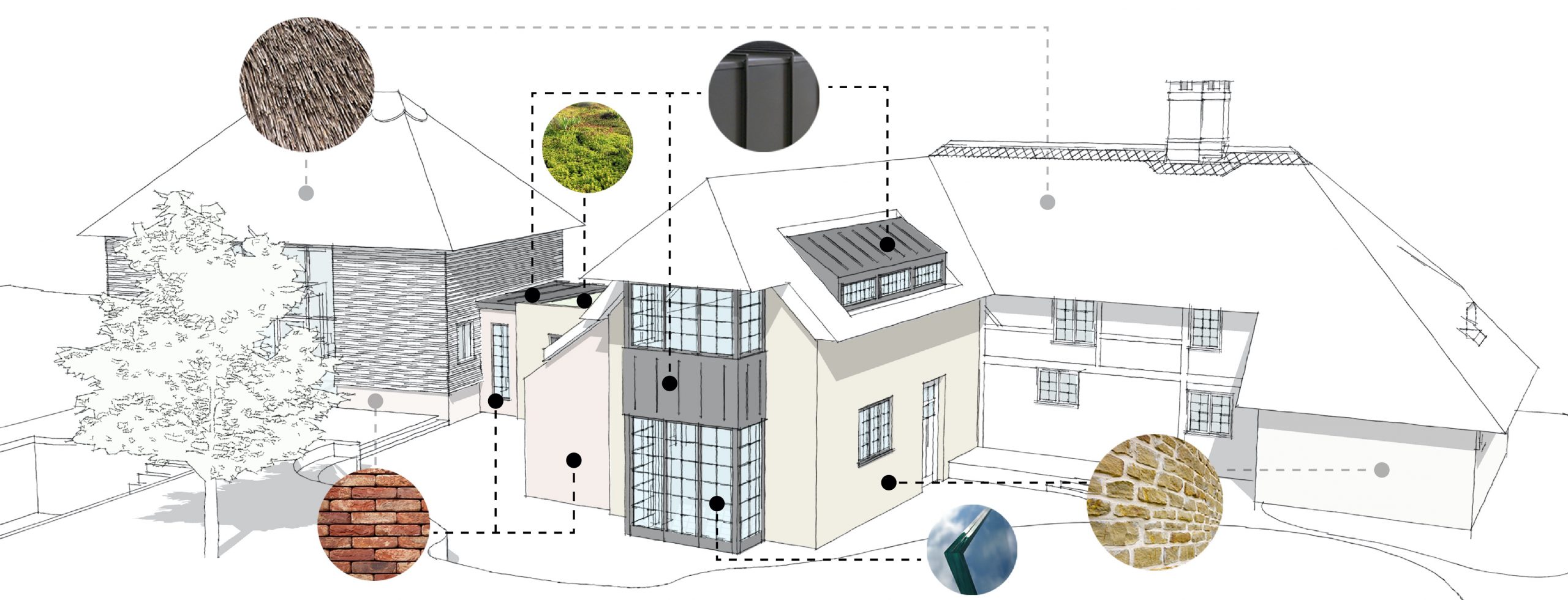
The material strategy is a “contemporary reinterpretation” of the West Sussex vernacular. We selected a diverse palette of locally sourced materials for this Grade II listed Contemporary Extension to ensure the new additions feel rooted in their context:
-
Traditional: Thatch, Cropped Horsham Stone, and handmade bricks.
-
Modern: Standing seam zinc cladding and a sustainable sedum rooftop.
-
Contrast: The sleek lines of the zinc and expansive glazing provide an elegant counterpoint to the “solid” textures of the timber frame and stone.
This project demonstrates how thoughtful heritage architecture can safeguard the longevity of a historic building by adapting it for 21st-century life through “harmony through contrast.”

| Material | Application | Purpose |
| Thatch | Roof Extension | Continuity with the original 16th-century aesthetic. |
| Horsham Stone | Walling (Cropped) | Grounding the extension in the local Sussex vernacular. |
| Standing Seam Zinc | Cladding | Providing a sleek, contemporary contrast to traditional textures. |
| Handmade Bricks | Infill & Walling | Matching the character and tonal variety of the existing masonry. |
| Structural Glazing | Link & Extension | Maximizing natural light and creating a “lightweight” visual connection. |
| Sedum | Rooftop | Enhancing biodiversity and softening the visual impact of the link. |
Frequently Asked Questions
Can you extend a Grade II listed building with a modern design? Yes. Historic England often supports contemporary extensions that are “of their own time” rather than pastiche copies. The key is ensuring the new design respects the scale, height, and significance of the original heritage asset.
What is a “Glazed Link” and why is it used? A glazed link is a lightweight corridor used to connect two separate buildings (like the cottage and the barn). It is a popular architectural solution for listed buildings because it creates a clear visual distinction between the old and the new, often satisfying planning officers who want the original structure to remain “readable.”
How do you choose materials for a heritage project in Pulborough? We focus on a “contemporary reinterpretation” of the local vernacular. By using traditional materials like Horsham Stone and Thatch alongside modern Zinc, we maintain harmony through shared color palettes and textures while using modern techniques to improve longevity and performance.
Will a contemporary extension affect the historical value of my home? When done correctly, a high-quality contemporary extension can actually enhance a listed building. It facilitates modern living—ensuring the building remains occupied and maintained—while protecting the original fabric from intrusive internal modifications.
What are the benefits of a Sedum roof on an extension? Beyond its beautiful appearance, a sedum (green) roof provides excellent thermal insulation, helps with rainwater management, and encourages local biodiversity, making the project more sustainable.
Are you looking to extend a listed property? [Contact our team today] to discuss how we can help you navigate the planning process and bring a contemporary vision to your heritage home.